In-Office General Anesthesia for Pediatric and Special Needs Patients: A Guide for Bay Area Dental Practices
Every pediatric and general dentist in the San Francisco Bay Area knows the case. A four year old with rampant decay across two quadrants who cannot tolerate treatment awake. A teenager with autism for whom even a mirror and explorer are overwhelming. An adult with severe developmental disabilities whose caregivers have been searching for comprehensive dental care for years. These patients need real treatment, not another attempt at papoose-free behavior guidance that ends after one filling.
The traditional answer has been the hospital operating room. And the traditional problem has been the waitlist: OR time for dental cases in the Bay Area is scarce, scheduling can stretch months, and untreated decay does not wait. Meanwhile the family sits in limbo and your treatment plan sits in a chart.
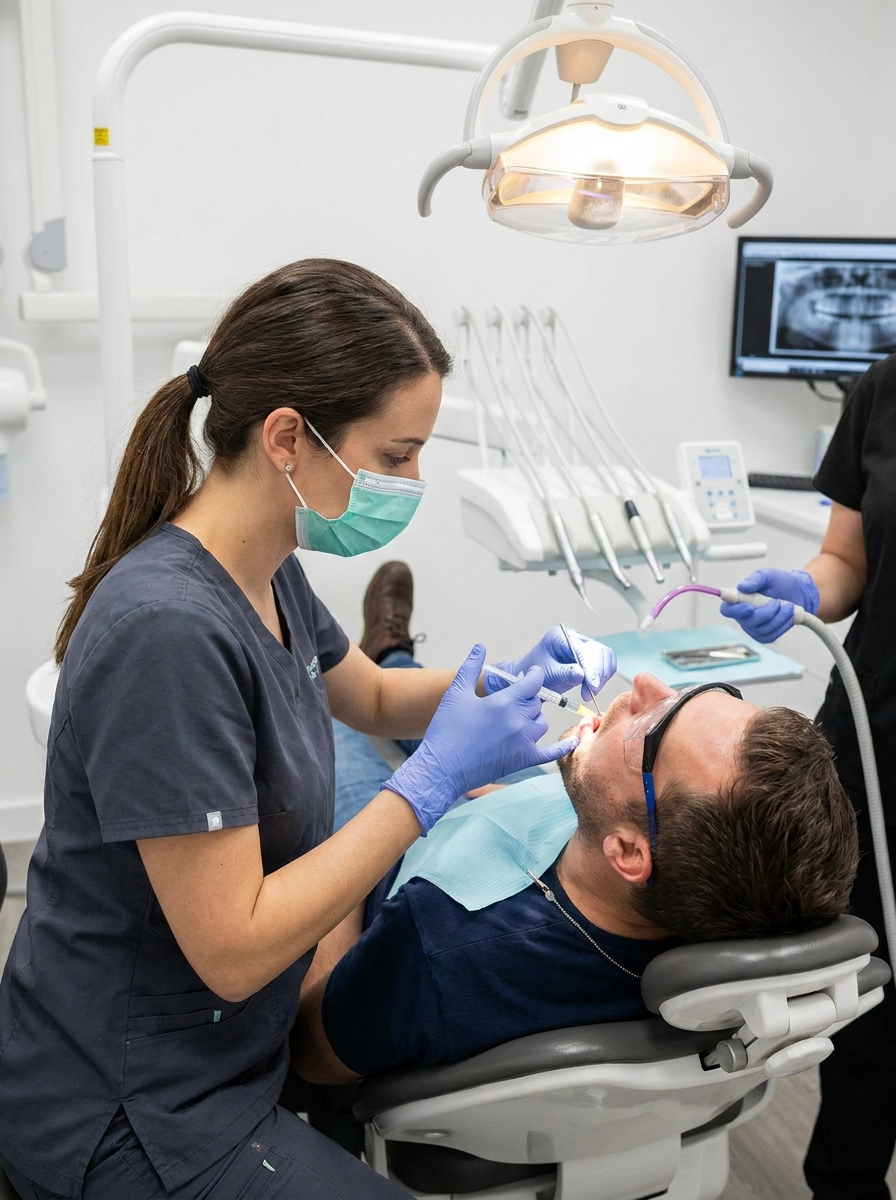
There is a better model, and a growing number of Bay Area practices have adopted it: partnering with a mobile dentist anesthesiologist who brings safe, hospital-standard general anesthesia directly into your operatory. This guide explains how the partnership works, what it requires from your practice, and which patients benefit most. It is written for dental teams, though families researching options are welcome to read along.
What Is a Dentist Anesthesiologist?
A dentist anesthesiologist is a dentist who has completed a dedicated postdoctoral residency in anesthesiology, training alongside physician anesthesiology residents in hospital operating rooms with a focus that includes pediatric anesthesia, airway management, and medically complex patients. It is the anesthesia specialty within dentistry, and it exists precisely for cases like the ones described above.
Dr. Matthew Hurd, DDS, founder of MH Dental Anesthesia, earned his DDS at UCSF School of Dentistry and completed his Dental Anesthesiology residency at The Ohio State University, one of the nation's leading programs. He is dual board-certified by the American Dental Board of Anesthesiology and the National Dental Board of Anesthesiology, with a clinical background that includes pre-hospital and emergency medicine experience dating to 2004. When he brings anesthesia care into a Bay Area dental office, he brings two decades of airway and emergency training with it.
How Does the Mobile Anesthesia Model Work?
The concept is straightforward: your practice provides the dentistry, and the anesthesiologist provides everything anesthesia-related. In practice, a case with MH Dental Anesthesia follows a consistent rhythm:
- Case review and patient selection. Dr. Hurd personally reviews each patient's medical history before any case is scheduled, screening for the factors that determine whether office-based anesthesia is appropriate or whether a patient's complexity genuinely calls for a hospital setting. Honest triage is part of the safety model.
- Family preparation. Families receive clear pre-operative instructions, including fasting guidelines and medication guidance, before the appointment. Your front office does not have to become anesthesia educators; that communication is handled.
- The day of treatment. Dr. Hurd arrives with hospital-grade monitoring and full emergency preparedness, reviews the plan with the patient and family step by step, induces and maintains anesthesia, and remains with the patient continuously from induction through recovery. Your team focuses entirely on the dentistry, often completing full-mouth treatment in a single visit that would otherwise take four or five behavior-limited appointments, or a months-away OR date.
- Recovery and discharge. Patients typically wake gradually within minutes of the procedure ending. Dr. Hurd manages emergence, monitors recovery, and releases the patient with personalized post-operative instructions once discharge criteria are met.
One structural detail matters more than any brochure point: every anesthetic is provided by Dr. Hurd himself. There is no subcontracting and no rotating roster of unfamiliar providers. The anesthesiologist your team plans the case with is the one at the head of the chair.
Which Patients Benefit Most From In-Office General Anesthesia?
Practices typically refer or schedule these categories of patients:
- Young children with extensive treatment needs. When decay spans quadrants and cooperation is limited by age, completing all treatment safely in one visit is kinder to the child and more predictable for the practice. Learn more about dental anesthesia for pediatric patients.
- Patients with special healthcare needs. For many patients with autism, developmental disabilities, or complex medical conditions, general anesthesia is not a convenience but the only humane route to comprehensive care. Our family guide to anesthesia for special needs children is a resource your team can share directly with caregivers.
- Severe dental anxiety and phobia. Adults who have avoided care for a decade often need one comprehensive visit under deep sedation or general anesthesia to get back to baseline before conventional care can resume.
- Strong gag reflexes, local anesthetic difficulties, and long complex procedures such as full-arch surgery, where patient stillness and airway control change what your surgical team can accomplish.
Not sure whether a case calls for moderate sedation, deep sedation, or general anesthesia? Our overview of sedation versus general anesthesia breaks down the four levels, and Dr. Hurd reviews the right depth for each patient during case planning. Adult-focused practices can also review our adult anesthesia services.
Is In-Office General Anesthesia Safe for Children?
This is the question parents ask your team, and the one your team rightly asks before partnering with anyone. The honest answer is that safety lives in the details: provider training, patient selection, monitoring, and emergency preparedness.
Pediatric anesthesia is its own discipline for good reason. A child's airway anatomy, weight-based dosing, developmental stage, and emotional state all change how anesthesia must be planned and delivered. That is exactly what a dental anesthesiology residency trains for, and it is why the office-based model pairs a dedicated, board-certified anesthesia provider with your dental team rather than asking one clinician to do both jobs. Throughout every case, Dr. Hurd uses the same monitoring equipment and safety standards used in hospital settings, maintains full emergency preparedness on site, and gives the anesthetic his complete, undivided attention from induction through discharge.
Equally important is what the model does not do: it does not force marginal cases into the office. Patients whose medical complexity warrants a hospital setting are identified during pre-operative review and directed there. Good anesthesia partners protect your patients and your practice by saying no when no is the right answer.
What Does Your Practice Gain From an Anesthesia Partnership?
Beyond the clinical case for it, Bay Area practices that add in-office general anesthesia consistently see three practice-level benefits: patients complete comprehensive treatment in single visits instead of fragmenting across months, families who would otherwise be referred out to hospital programs stay within your practice, and your team gains the ability to say yes to the pediatric, special needs, and phobic patients your community struggles to place. Dental practices across the Bay Area, from solo pediatric offices to large group organizations, already trust this model.
Start the Conversation
If your practice treats children, special needs patients, or adults whose care keeps stalling for want of anesthesia, a partnership conversation costs nothing and usually answers every logistical question in one call: scheduling, case criteria, facility requirements, and how your first cases would run.
Request a consultation with Dr. Hurd at MH Dental Anesthesia, serving dental practices throughout the San Francisco Bay Area. Safe, comfortable, expert anesthesia care, delivered where your patients already feel at home: your office.
Frequently Asked Questions
What is the difference between a dentist anesthesiologist and a dentist who provides sedation?
A dentist anesthesiologist has completed a dedicated postdoctoral residency in anesthesiology covering general anesthesia, pediatric anesthesia, and airway and emergency management, and provides anesthesia as their sole role during treatment. Sedation permits held by treating dentists typically cover lighter sedation levels, and the treating dentist divides attention between the procedure and the sedation.
What does the dental practice need to provide for in-office general anesthesia?
The dental team provides the operatory, the procedure, and the patient. The anesthesia team handles pre-operative medical review, family instructions, anesthesia equipment and medications, hospital-grade monitoring, emergency preparedness, and recovery through discharge. Specific facility details are reviewed during the initial consultation.
Which patients are not candidates for office-based anesthesia?
Patients whose medical complexity calls for hospital resources are identified during Dr. Hurd's pre-operative review of each patient's history and are directed to the appropriate setting. Careful patient selection is a core part of the office-based safety model.
