How to Choose a Bay Area Anesthesia Provider for Dental Care: Credentials, Questions, and Costs
Searching for Bay Area anesthesia after your dentist recommends sedation or general anesthesia turns up a confusing mix of results: hospital anesthesia groups, ambulatory surgery centers, general dentists advertising sleep dentistry, and mobile dental anesthesiologists who travel to the dental office. Those options are not interchangeable. The training required, the depth of care each provider is legally permitted to deliver, and what you will ultimately pay differ substantially.
This guide is written for patients and families across the San Francisco Bay Area who have to make that choice, often quickly and often while anxious. It covers the credentials that actually matter, the specific questions worth asking before you book, what dental anesthesia typically costs, and how insurance coverage works under California law. MH Dental Anesthesia, founded and led by Dr. Matthew Hurd, DDS, a dual board-certified Dentist Anesthesiologist, provides office-based anesthesia care to dental practices throughout the region.
Not Every Bay Area Anesthesia Provider Can Deliver the Same Level of Care
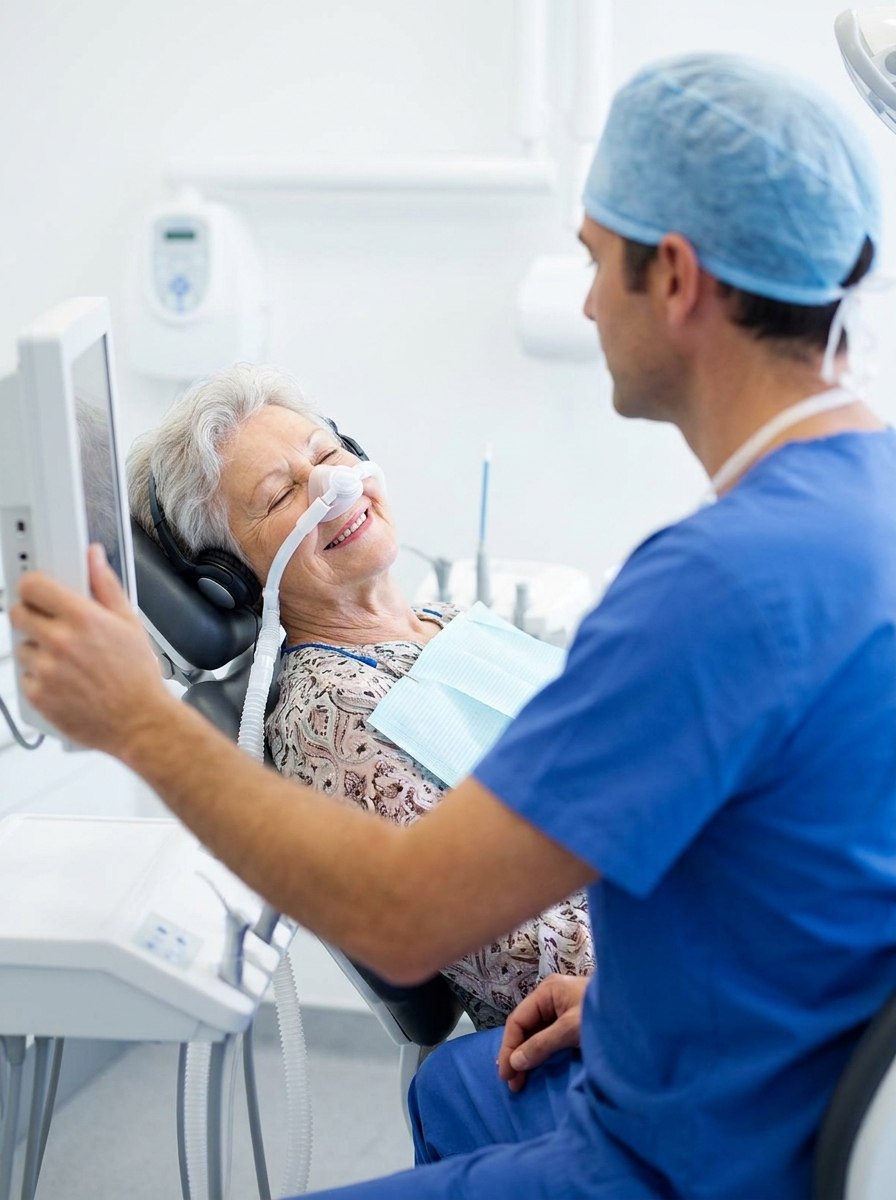
The word sedation covers a wide range of experiences. The American Society of Anesthesiologists defines four distinct levels along a single continuum: minimal sedation, moderate sedation, deep sedation, and general anesthesia. Each level requires different medications, different monitoring, and a different level of provider credentialing.
This matters because a patient shopping for anesthesia often assumes any office offering sedation can safely take them to whatever depth they need. In practice, a general dentist with an oral conscious sedation permit and a board-certified dentist anesthesiologist are separated by years of additional hospital-based residency training. If your procedure, your anxiety level, or your medical history calls for deep sedation or general anesthesia, the first provider is not a substitute for the second.
Our companion guide on sedation vs general anesthesia breaks down what each level feels like from the patient's side. This article focuses on the provider.
California Permit Levels: What Your Provider Is Actually Licensed to Do
California regulates dental anesthesia more tightly than many states, and the permit structure is public information you can verify yourself.
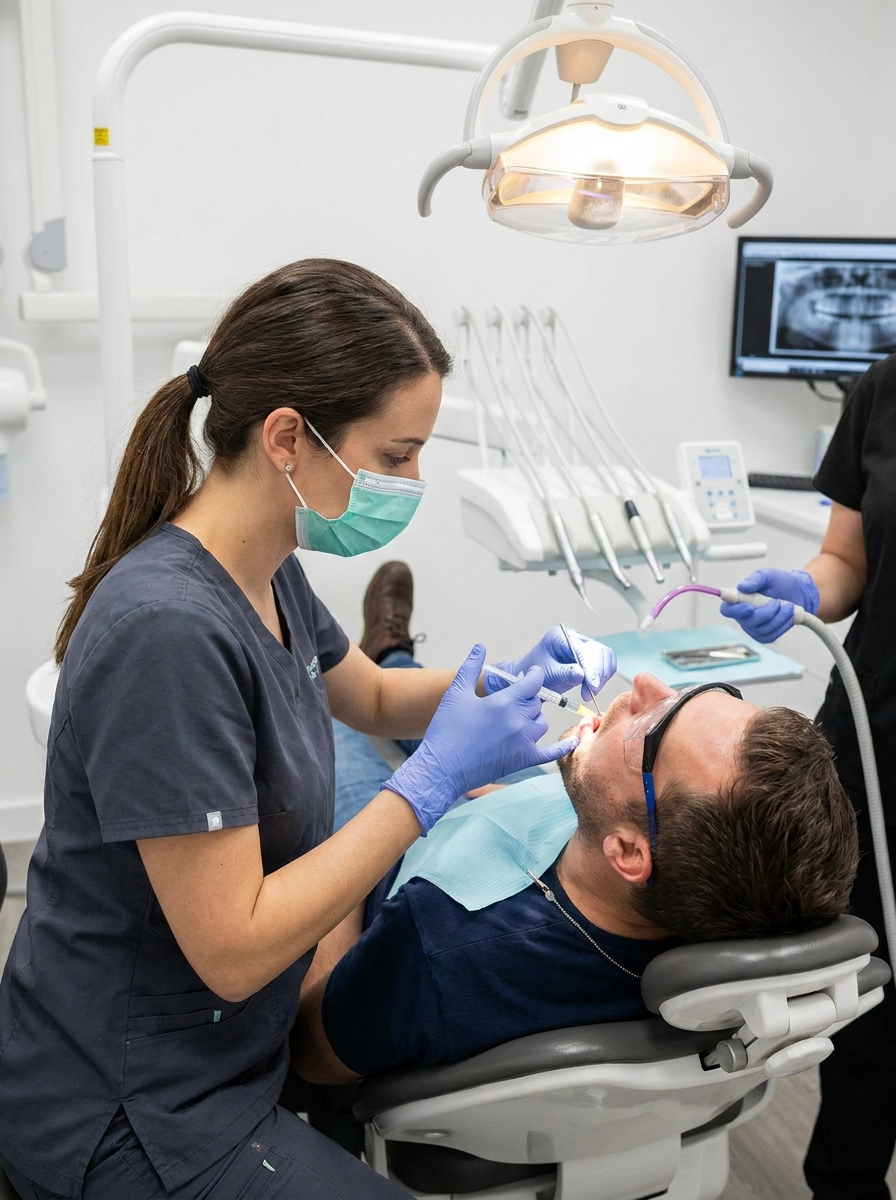
Under the framework established by SB 501, the Dental Board of California issues a General Anesthesia Permit that allows a dentist to administer or order the administration of deep sedation and general anesthesia to patients seven years of age and older. Treating patients under seven at those depths requires a separate pediatric endorsement, which carries its own requirements: completion of an accredited program covering pediatric sedation and anesthesia, twenty documented cases in children under seven within the preceding twenty-four months, and current Pediatric Advanced Life Support certification, renewed every two years.
The Board also requires an onsite facility inspection within one year of issuance of an initial permit and every five years thereafter. Refusal to submit to inspection results in denial or revocation of the permit. For pediatric cases specifically, California requires the operating dentist and at least two additional personnel to be present throughout the procedure, with at least one holding current PALS certification and dedicated solely to monitoring the patient.
Two practical takeaways for patients evaluating a Bay Area anesthesia provider:
- If the patient is under seven, confirm the provider holds the pediatric endorsement, not just a general anesthesia permit.
- Permit status and license history can be checked directly through the Dental Board of California's online license lookup. A provider who hesitates to give you their license number is telling you something.
Dentist Anesthesiologist, Oral Surgeon, or Physician Anesthesiologist?
Three models are common across the Bay Area, and each carries a different tradeoff.
The operator-anesthetist model
A single clinician both performs the dental procedure and manages the anesthetic. This is standard practice in oral and maxillofacial surgery and is permitted in California for appropriately credentialed providers. It is efficient and, for straightforward cases in healthy patients, well established.
The tradeoff is attention. The American Society of Anesthesiologists' position on office-based dental settings states that a designated individual, other than the individual performing the procedure, should be continuously present to monitor the patient, and that during deep sedation or general anesthesia this individual should have no other responsibilities. When a case is long, the patient is medically complex, or something unexpected happens, divided attention is the variable that matters most.
The physician anesthesiologist model
A medical anesthesiologist travels to the dental office. Training in general anesthesia is extensive, but experience specific to the shared airway of dentistry, pediatric dental behavior, and the operative field of a dental procedure varies considerably by individual background.
The dentist anesthesiologist model
A dentist anesthesiologist has completed a dental degree plus an accredited postdoctoral residency in anesthesiology within dentistry, a discipline recognized by the American Dental Association as a dental specialty since 2019. The provider does only the anesthetic, so the dental team focuses on treatment while the anesthesia provider focuses entirely on the patient.
Dr. Matthew Hurd holds dual board certification from both the American Dental Board of Anesthesiology and the National Dental Board of Anesthesiology. He earned his DDS at UCSF School of Dentistry, completed his residency in Dental Anesthesiology at The Ohio State University, has more than 20 years of pre-hospital and emergency medicine experience, and serves as a Clinical Assistant Professor at the University of the Pacific, Arthur A. Dugoni School of Dentistry. His full background is on the MH Dental Anesthesia about page.
Ten Questions to Ask a Bay Area Anesthesia Provider Before You Book
Bring this list to your consultation. A well-run practice will answer every one without defensiveness.
- What is your specific anesthesia credential, and what is your license number? You are looking for the permit level and, for young children, the pediatric endorsement.
- Will you personally administer my anesthetic, or could a different provider be assigned? Rotating or subcontracted providers are common in this field. Ask directly.
- Who monitors the patient while the dental work is happening? At deep sedation and general anesthesia, that should be a dedicated person with no other job during the case.
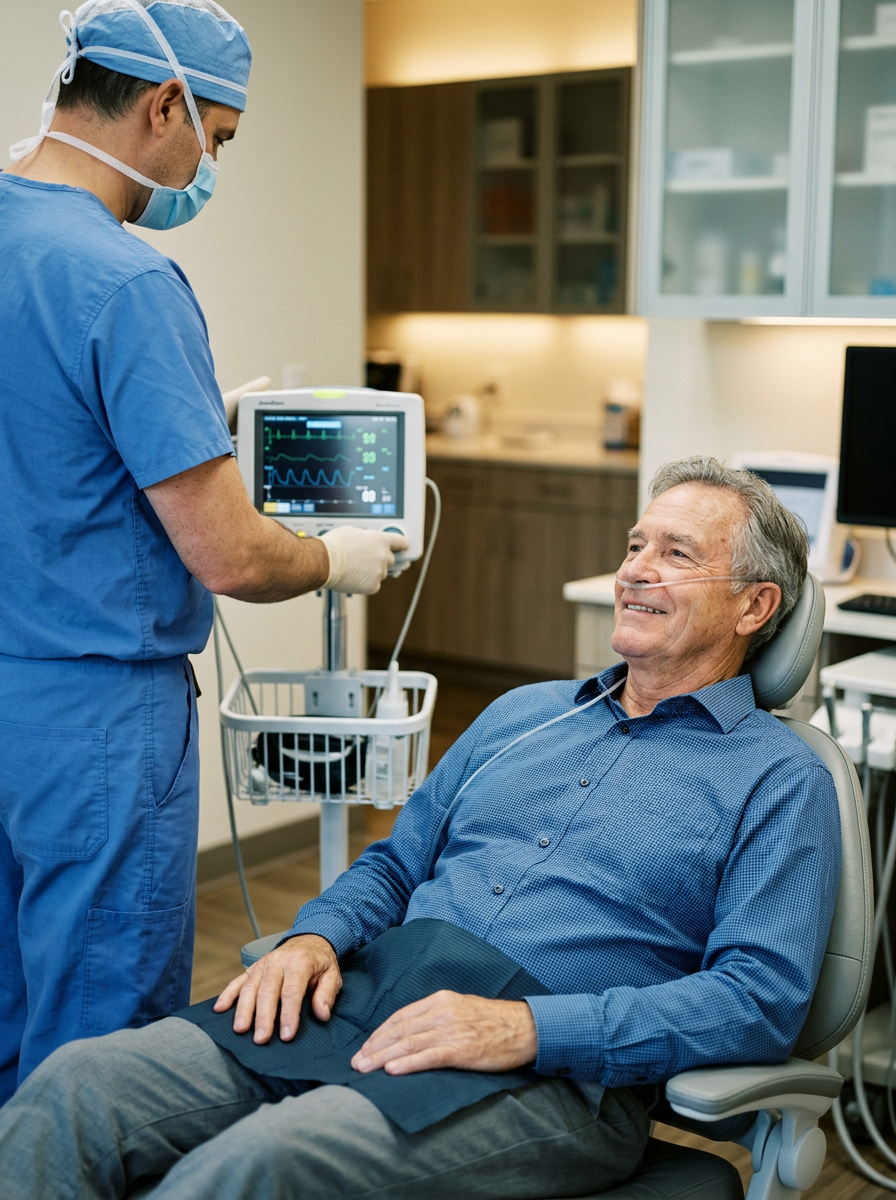
- What monitoring equipment will be used? Continuous pulse oximetry, blood pressure, ECG, and capnography are the baseline expectation.
- What emergency medications and airway equipment will be in the room? Ask whether they are age-appropriate for the patient.
- What are your and your team's current life support certifications? BLS and ACLS at minimum, PALS for pediatric cases.
- How will my medical history and medications change the plan? A thorough provider will already be asking you this.
- Who stays with the patient during recovery, and what are the discharge criteria?
- How do I reach you after we go home if something concerns me?
- Can I have a written fee estimate before the appointment? Covered in detail below.
What Does Dental Anesthesia Cost in the Bay Area?
There is no authoritative national price dataset for dental anesthesia, and published estimates differ substantially from one source to the next. The ranges below are drawn from commonly cited industry sources and are offered only to orient expectations. Bay Area pricing generally sits at or above the higher end of each band.
- Nitrous oxide (minimal sedation): commonly cited around $50 to $200 per visit
- Oral sedation: commonly cited around $150 to $500 per visit
- IV moderate sedation: commonly cited around $250 to $1,000 or more, depending on length
- General anesthesia: commonly cited around $500 to $2,000 or more, with hospital and surgery center settings adding separate facility fees
- A traveling dental anesthesiologist: commonly cited around $500 to $1,500 per case
Treat these strictly as orientation and never as a quote. Only a written estimate from the specific provider, for your specific case, is reliable. The single largest cost driver is time, since anesthesia is typically billed in increments after a base or minimum case fee. A two-hour full-mouth rehabilitation and a forty-minute extraction are not comparable.
When you request a written estimate, ask it to specify: the base or minimum case fee, how additional time is billed, whether any travel or setup fee applies, the cancellation and no-show policy, and whether the estimate covers the anesthesia professional fee only or also the dental treatment. The dental procedure itself is almost always billed separately by the dental office.
One structural difference is worth understanding. Hospital and surgery center cases generate a facility charge on top of both the anesthesia fee and the dental fee. Office-based anesthesia delivered in the dental office where treatment is already scheduled removes that third line item and the separate scheduling it requires.
Does Insurance Cover Dental Anesthesia in California?
The honest answer is: sometimes, and rarely automatically.
Most dental plans do not treat sedation as a routine covered benefit, and it is frequently classified as elective. Coverage is more likely when anesthesia is documented as medically necessary, and in those cases the claim often belongs to the medical plan rather than the dental plan.
California law adds a specific mandate that is useful to know but frequently misunderstood. Health and Safety Code section 1367.71 requires health care service plans to cover general anesthesia and associated facility charges for dental procedures rendered in a hospital or surgery center setting, where the enrollee's clinical status or underlying medical condition requires that setting. Three groups qualify: enrollees under seven years of age; enrollees with developmental disabilities, regardless of age; and enrollees whose health is compromised and for whom general anesthesia is medically necessary, regardless of age.
Two limits matter. First, the statute expressly does not require plans to cover charges for the dental procedure itself, including the dentist's professional fee. Second, it is written for hospital and surgery center settings, so it does not by itself compel coverage of office-based anesthesia. Plans may also require prior authorization.
Practically, that means you should ask your anesthesia provider and dental office for the procedure codes they will submit, then contact your medical plan and your dental plan and request a predetermination of benefits in writing before the appointment. It takes a phone call and it prevents the most common billing surprise in this field.
Red Flags When Comparing Bay Area Anesthesia Providers
- Reluctance to name the individual provider who will actually be in the room on the day
- No pre-procedure review of medical history and current medications before the case is scheduled
- Vague answers about monitoring equipment or emergency preparedness
- Deep sedation or general anesthesia offered for a child under seven without a pediatric endorsement
- Pricing quoted only verbally, with no written estimate and no discussion of how time is billed
- No clear discharge criteria or post-operative contact method
How MH Dental Anesthesia Approaches These Questions
Every anesthetic at MH Dental Anesthesia is personally administered, monitored, and managed by Dr. Hurd from the start of the case through recovery. There is no rotating provider model and no subcontracting, which means the person who reviews your medical history at consultation is the person standing beside you on the day.
Hospital-grade monitoring equipment, emergency medications, and age-appropriate airway equipment travel to every case. Anesthesia plans are individualized to the patient's health history, age, and planned procedure, and families receive written pre-procedure instructions in advance along with direct contact information for questions after discharge.
The practice provides moderate sedation, deep sedation, general anesthesia for adults, and pediatric dental anesthesia, including opioid-free plans for children where clinically appropriate, throughout the San Francisco Bay Area.
Request a Consultation in the San Francisco Bay Area
Choosing an anesthesia provider is a decision most people make once, under time pressure, with limited information. The questions above exist to make that decision less of a guess. Credentials you can verify, a named provider who will actually be present, monitoring you understand, and a written estimate are reasonable things to expect from any Bay Area anesthesia practice.
Request a consultation with MH Dental Anesthesia to review your medical history, your planned procedure, and the level of care that fits, with Dr. Matthew Hurd, DDS, a dual board-certified Dentist Anesthesiologist serving dental practices across the San Francisco Bay Area.