Bay Area Anesthesia for Medically Complex and Older Adult Patients: A Referral Guide for Dental Practices
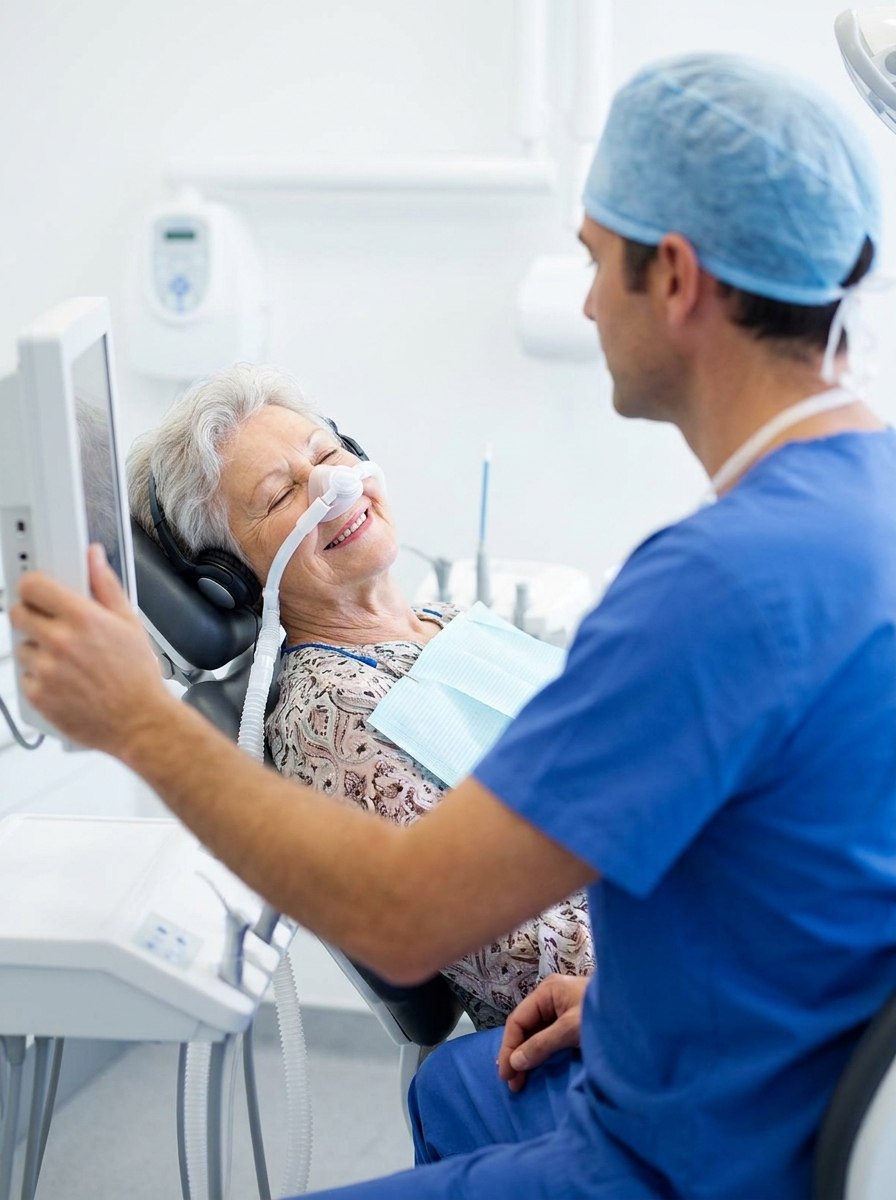
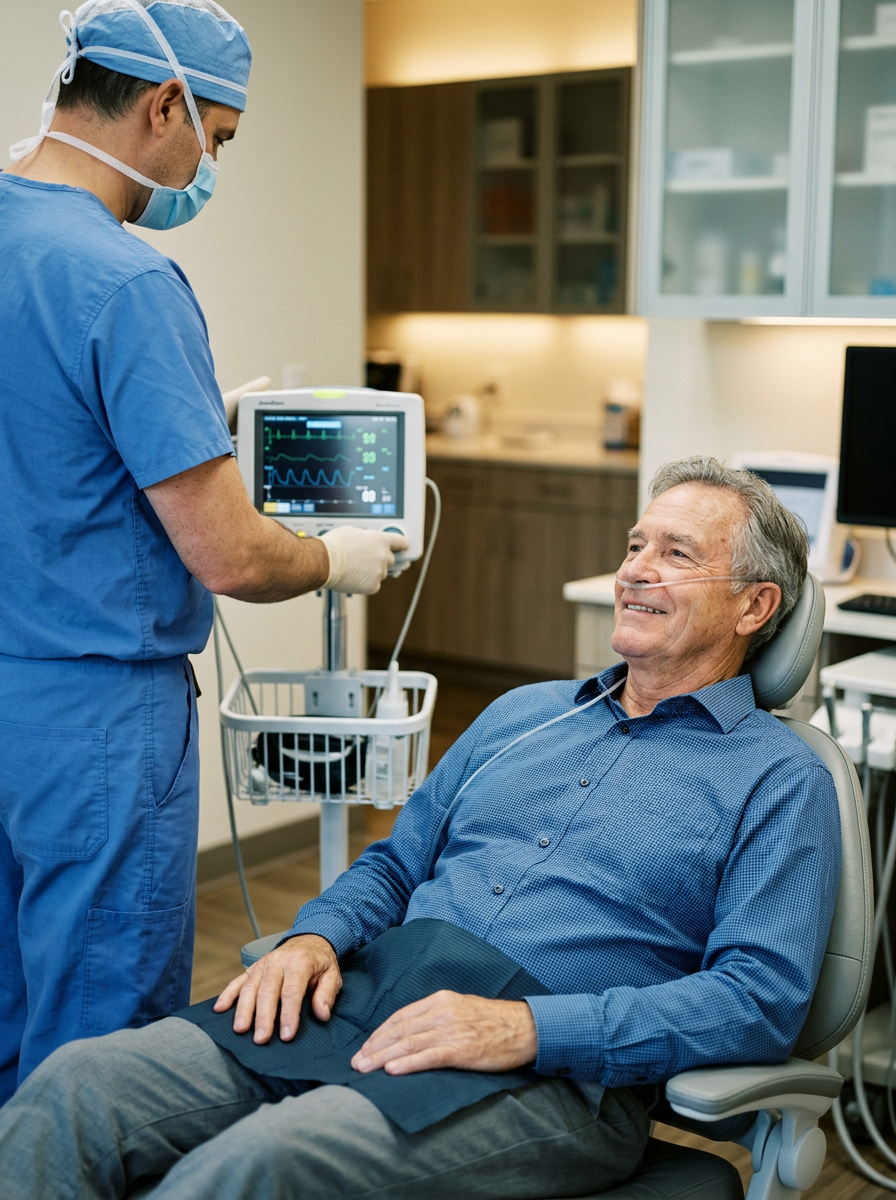
An 81-year-old patient presents for three extractions and an immediate denture. She takes apixaban, metformin, lisinopril, carvedilol, and donepezil. Her STOP-BANG score suggests untreated obstructive sleep apnea. She becomes agitated in the chair after about twenty minutes. Nothing about this case is exotic, and most Bay Area general practices see some version of it monthly.
The question is not whether the dentistry can be done. It is whether it should be done awake, in your operatory, by a team already occupied with the procedure. This guide is written for Bay Area dentists, pediatric dentists, and oral surgeons who are deciding when a medically complex or older adult patient warrants a dedicated Bay Area anesthesia provider, and what changes clinically when one is involved. The short version: the referral threshold in this population is lower than most practices assume, and the reasons are physiologic rather than behavioral.
The Referral Decision Starts With ASA Physical Status
The American Society of Anesthesiologists Physical Status classification remains the most useful single filter in dentistry because it is fast, portable, and understood by every anesthesia provider you will ever call.
- ASA I — a normal healthy patient
- ASA II — mild systemic disease without substantive functional limitation, such as well-controlled hypertension or a current smoker
- ASA III — severe systemic disease with substantive functional limitation, such as poorly controlled diabetes, moderate reduction in ejection fraction, or a myocardial infarction more than three months ago
- ASA IV — severe systemic disease that is a constant threat to life
- ASA V and VI — not encountered in office-based dentistry
Most office-based dental anesthesia is appropriate for ASA I and II patients, and for carefully selected ASA III patients whose disease is stable and whose functional capacity is documented. ASA III is the point at which the operator-anesthetist model deserves reconsideration: not because the case cannot be done in an office, but because the margin for divided attention narrows.
The ASA's own statement on sedation and anesthesia in dental office-based settings is direct on this point. A designated individual, other than the individual performing the procedure, should be continuously present to monitor the patient, and during deep sedation or general anesthesia that individual should have no other responsibilities. In a medically complex patient, that separation is the safety feature.
Chronologic Age Is the Wrong Trigger. Physiologic Reserve Is the Right One.
A robust 78-year-old cycling three times a week is a different anesthetic risk from a sedentary 68-year-old with heart failure and cognitive impairment. Four systems drive the difference.
Airway and aspiration
Older adults have blunted cough and airway protective reflexes, reduced pharyngeal muscle strength, and decreased sphincter tone. Dental procedures generate water spray and debris in a shared airway. Aspiration risk is meaningfully elevated, which makes fasting compliance, continuous suction, and airway protection at deeper planes more consequential than in a younger cohort. Undiagnosed obstructive sleep apnea compounds this; a STOP-BANG screen at the treatment-planning visit costs nothing and changes the conversation.
Cardiovascular reserve
Maximum cardiac output declines with age and beta-adrenergic responsiveness is reduced. The clinical consequence is that blood pressure swings from sedation onset and from surgical stimulation are disproportionately large, and the physiologic capacity to compensate for them is smaller. Hypotension on induction and hypertensive response to inadequate local anesthesia both carry more weight in this population.
Hepatic, renal, and body composition changes
Reduced hepatic and renal clearance prolongs drug effect. A larger volume of distribution for lipophilic agents extends their half-life. Central nervous system sensitivity increases, so anesthetic requirement falls substantially, and induction agents are commonly dosed well below standard adult amounts. Standard adult dosing is not conservative in an 80-year-old. The operating principle is the lightest effective depth, titrated to effect, dosed to physiologic reserve rather than to age or weight alone.
Cognitive baseline
Document baseline cognition before the case, not after. Without it, there is no way to tell postoperative delirium from a patient's normal state, and no way to reassure a family that what they are seeing is or is not new.
The Medication Review That Prevents Most Intraoperative Surprises
Polypharmacy is where medically complex cases actually go wrong, and it is the single highest-yield item on a referral form. A few patterns recur:
- Beta-blockers and statins are generally continued through the perioperative period in patients already established on them. Abrupt beta-blocker withdrawal is its own risk.
- ACE inhibitors and ARBs can generally be continued in hemodynamically stable patients, though holding a dose in coordination with the prescribing physician has been shown to reduce intraoperative hypotension in some patients.
- Diabetes medications interact directly with fasting requirements. A patient held NPO on their usual regimen is a hypoglycemia risk. This warrants a conversation with the prescriber, not a default instruction.
- Anticoagulants and antiplatelets should not be interrupted reflexively. The American Dental Association's position is that for most patients it is unnecessary to alter anticoagulation or antiplatelet therapy prior to dental intervention, with bleeding managed by local hemostatic measures. Where modification is being considered, that decision belongs to the prescribing physician, made in advance and documented.
- Parkinson's medications are timing-critical. A missed levodopa dose during a long case or extended fast can produce marked rigidity and swallowing difficulty in recovery.
- Chronic benzodiazepine or opioid use alters dose-response in both directions and should be disclosed, not discovered.
Presentations That Most Often Warrant a Dedicated Bay Area Anesthesia Provider
Referral is usually indicated when one or more of the following are present alongside a procedure of meaningful length:
- ASA III status with limited or undocumented functional capacity.
- Moderate to severe or untreated obstructive sleep apnea, particularly with a high BMI or difficult airway predictors.
- Dementia or advanced cognitive impairment where cooperation cannot be sustained and behavioral guidance has already failed.
- Movement disorders including Parkinson's disease, essential tremor, and dyskinesias that make precise operative work unsafe.
- Significant cardiac history: recent infarction, reduced ejection fraction, symptomatic valvular disease, or an implanted device.
- Full-mouth or multi-quadrant treatment plans in a frail patient, where consolidating care into a single anesthetic is safer and kinder than six visits.
- Adults with developmental disabilities whose care has been deferred for years and who cannot tolerate awake treatment.
The last two categories are where office-based general anesthesia changes outcomes most visibly. A patient who has avoided the dental chair for a decade rarely needs one filling.
Recovery Is Where Older Adults Get Hurt
Postoperative delirium is common and under-recognized in this population. Pooled incidence after non-cardiac surgery in older adults sits near 19 percent, and reported rates after major surgery range widely, from roughly 20 percent to more than half of patients depending on the procedure, the population, and how rigorously delirium is screened for. Advanced age, pre-existing cognitive impairment, and procedure duration are the dominant risk factors. Falls in the recovery period are the other major complication, driven by altered mental status, dehydration, residual medication effect, and impaired baseline mobility.
Practically, that means recovery for this population should include extended observation rather than a fixed clock, physical support during the first transfers, explicit discharge criteria rather than a general impression of alertness, a responsible escort who is briefed in person, and written instructions that a caregiver can follow at home. Current guidance also favors the lightest effective depth of sedation in older adults where the procedure permits, which is a planning conversation worth having before the day of treatment rather than during it.
What Changes in Your Operatory When a Dentist Anesthesiologist Comes to You
A mobile Bay Area anesthesia provider keeps the case in your operatory, on your schedule, with your team and your instruments. The patient avoids hospital scheduling delays, a separate facility fee, and an unfamiliar clinical environment, which matters disproportionately for patients with dementia or developmental disabilities.
At MH Dental Anesthesia, Dr. Matthew Hurd, DDS, personally transports and sets up hospital-grade monitoring, anesthetic agents, and emergency preparedness supplies at each case location, and personally administers, monitors, and manages every anesthetic from induction through recovery. There is no subcontracting and no handoff mid-case. Your team performs the dentistry; the anesthesia provider does nothing else but manage the patient.
Dr. Hurd is dual board-certified by the American Dental Board of Anesthesiology and the National Dental Board of Anesthesiology. He completed his DDS at UCSF School of Dentistry and his residency in Dental Anesthesiology at The Ohio State University, brings more than 20 years of pre-hospital and emergency medicine experience since 2004, and serves as a Clinical Assistant Professor at the University of the Pacific, Arthur A. Dugoni School of Dentistry. Full background is available on the MH Dental Anesthesia about page.
Office-Based Anesthesia Versus a Hospital or Surgery Center Referral
For medically complex adults, the alternative to a mobile Bay Area anesthesia provider is usually a hospital or ambulatory surgery center referral. That pathway is the right call for genuinely unstable ASA IV patients and for cases requiring resources an office cannot replicate. For the large middle band of stable ASA III patients, it introduces friction that frequently ends in care never happening.
Three differences are worth explaining to patients directly:
- Wait time. Operating room and surgery center access for elective dental cases is often measured in months rather than weeks. For a patient in active pain or with a rapidly deteriorating dentition, that delay has clinical cost.
- Cost structure. Hospital and surgery center cases generate a facility charge on top of the anesthesia fee and the dental fee. Office-based care removes that third line item.
- Coverage. California Health and Safety Code section 1367.71 requires health care service plans to cover general anesthesia and associated facility charges for dental procedures rendered in a hospital or surgery center setting, where the enrollee's clinical status or underlying medical condition requires that setting. Three groups qualify: enrollees under seven; enrollees with developmental disabilities, regardless of age; and enrollees whose health is compromised and for whom general anesthesia is medically necessary, regardless of age. The statute expressly does not require coverage of the dental procedure itself or the dentist's professional fee, and it is written for facility settings rather than office-based care. Patients should request a written predetermination of benefits from both their medical and dental plans before the appointment either way.
The environment itself is also a clinical variable. Patients with dementia or developmental disabilities often tolerate a familiar dental office better than a pre-operative holding area, and a calmer induction is easier to manage.
Building the Referral Into Your Workflow
The cases that run smoothly are the ones where the anesthesia provider had the information a week early. A useful referral packet includes:
- Complete medication list with doses, including over-the-counter and supplements
- Active medical diagnoses and the treating physicians' contact information
- Prior anesthesia history, including any adverse reactions or difficult intubation
- Recent vitals, and a functional capacity note if available
- The proposed treatment plan with a realistic chair-time estimate
- Airway screening notes, including STOP-BANG if obtained
- Baseline cognitive status and the name of the responsible caregiver or escort
Anesthesia planning is not a same-week decision for an ASA III patient. Building the medical review into treatment planning rather than into scheduling is what keeps cases from being cancelled on the morning of.
Refer a Patient in the San Francisco Bay Area
Medically complex and older adult patients are the group most likely to have care deferred, and deferral compounds. A patient who cannot tolerate an awake extraction this year presents with a full-mouth problem in three. Office-based anesthesia is often the intervention that lets a practice treat comprehensively in one visit rather than piecemeal across many.
MH Dental Anesthesia provides moderate sedation, deep sedation, and general anesthesia for adult patients directly inside dental offices throughout the San Francisco Bay Area. To discuss a specific patient or set up a referral relationship, contact MH Dental Anesthesia.